

Living in Fruit Heights, Utah: An Honest Guide from a Local Realtor
Fruit Heights is one of the smallest cities in Davis County — 6,023 people spread across 2.3 square miles on the east bench, between Kaysville and the Wasatch foothills. It is named for the cherry, peach and apple orchards that used to cover this slope, and enough of that character survives that people who grew up in the county still think of it as the quiet one.
It is also a city almost nobody moves to by accident. There is no exit sign for it, no downtown, and very little new construction. People end up here because they went looking. This is an honest account of what they find: what homes actually cost right now, how the city is laid out, what the commute really is, and what there is to do on a Saturday.
|
$755,122
Median sale price (Redfin, three months ending July 2026)
|
34
Median days on market, down from 44 a year ago
|
6,023
Population (Census ACS 2024)
|
22 mi
To downtown Salt Lake City by US-89
|
What homes cost in Fruit Heights right now
Here is the part most agent websites skip, so let me put it plainly: prices in Fruit Heights are down. Over the three months ending July 2026, the median sale price was $755,122 — a drop of 7.3% from the same period a year earlier.
| Measure | Now | A year ago | What it means |
|---|---|---|---|
| Median sale price | $755,122 | Down 7.3% | Buyers have more room than they did; sellers cannot price off 2024 comps |
| Median days on market | 34 days | 44 days | Correctly priced homes are actually moving faster than last year |
| Homes sold in the month | 13 | 16 | A very small market — read every statistic with that in mind |
| Median household income | $140,679 | — | About 1.5× the Utah median of $95,166 |
The shape of the housing stock explains a lot. Among owner-occupied homes in Fruit Heights, about 65% are valued between $500,000 and $1 million, and roughly 12% are over $1 million. Almost nothing sits below $400,000. There is very little entry-level product here and effectively no condo market. Rentals are thin too: ICO Orchard Farms on Lily Drive, with two- and three-bedroom floor plans, a pool and a fitness center, is essentially the city’s only apartment community. Beyond the occasional basement or townhome, larger complexes are easier to find in Kaysville, Layton and Farmington. If you are looking for a starter home, Fruit Heights will frustrate you — Layton and Clearfield are where that search belongs.
Thirteen homes sold here in a month. In a market that small, two or three expensive sales on the bench can swing the median by tens of thousands of dollars, and a quiet month of modest sales can swing it back. That 7.3% decline is real and worth knowing, but it is not the same as a 7.3% drop in the value of your specific house. Before you price a home in Fruit Heights, look at the handful of genuinely comparable sales — not the citywide number.
How the city is laid out
Fruit Heights runs uphill. US-89 cuts across the western edge, and the city climbs east from there toward the mountains. Where a house sits on that slope tells you most of what you need to know about it — the lot size, the view, the age, and the price.
The east bench is the upper edge, and it is where the largest lots and the newest custom homes are. The clearest example is Rock Loft Ridge Estates, which the city approved on final plat in July 2022. It begins near 1665 East Terrace Drive and runs south toward Bair Canyon, covering about 65.79 acres, with lots ranging from 12,000 square feet to a full 50,000 square feet — that is a quarter acre at the small end and over an acre at the large end. Goldspur Estates is the other named development the city currently tracks, also zoned R-1-12.
The golf course area sits around Davis Park Golf Course, and you can find it on a map without a map — the streets are named Fairway View Drive, Bogey Drive and Birdie Lane. Homes here tend to be established rather than new, on generous lots, and the golf course itself functions as the neighborhood's open space.
The older central streets, closer to US-89 and Nicholls Road, hold the mid-century and 1970s-80s homes that make up much of the city's stock. These are generally the most attainable houses in Fruit Heights, and they are where a buyer who wants this city but not a bench price usually ends up.
Two names you will hear from people who live here are Hidden Springs, on the east side, which takes in the Deer Field at Hidden Springs homes and streets such as Deer Crest Circle; and Cherry Heights, a single-family neighborhood that carries the city’s orchard heritage in its name. Both sit above the older central streets and below the newest construction on the bench.
One thing worth saying honestly: because Fruit Heights grew in small increments over decades rather than in master-planned phases, a lot of what people call “neighborhoods” here are really just clusters of streets, and different residents use different names for the same area. If you have heard a subdivision name and want to know exactly where it is and what has sold there, ask me — that is a records question with a real answer, not a guess.
Schools
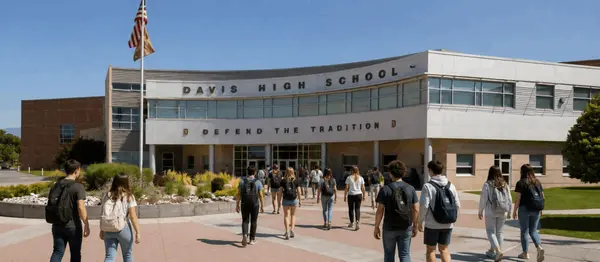
Every public school serving Fruit Heights belongs to Davis School District, and every one of them carries a Kaysville mailing address — which is why searching for “schools in Fruit Heights” often turns up nothing. The city feeds two elementary schools (Burton and Morgan), two junior highs (Fairfield and Kaysville), and one high school, Davis High.
One detail deserves a mention here because it genuinely affects where families buy: Morgan Elementary is one of only three French dual language immersion schools in the entire Davis District, and because Fairfield Junior High and Davis High both serve Fruit Heights, a child can follow the French pathway from 1st grade to college credit without ever leaving their assigned schools.
I have written the full breakdown — every school with grades, addresses and phone numbers, plus how boundaries work, how to check a specific address, and the open enrollment calendar — in Best Schools in Fruit Heights, Utah: A Parent's Guide.
The commute
Fruit Heights sits on US-89 rather than I-15, which is the single most useful thing to understand about getting anywhere from here. US-89 runs the length of the east bench and rejoins I-15 south of Farmington, so you get a calmer road for the first stretch of the drive and you skip some of the worst of the Davis County merge.
| Destination | Distance | Drive, no traffic | Route |
|---|---|---|---|
| Downtown Salt Lake City | 22 miles | About 28 minutes | US-89 south to I-15 |
| Ogden | 15 miles | About 22 minutes | US-89 north |
| Farmington FrontRunner station | A few minutes south | — | 450 North 850 West, Farmington |
The train is the part people underuse. Farmington station is the nearest FrontRunner stop, it has roughly 870 free park-and-ride spaces, and the line runs from Ogden all the way to Provo. If you work downtown and would rather read than drive, this is a realistic daily option rather than a theoretical one. The station also sits at Station Park, a 62-acre shopping center with a 16-screen Cinemark, REI, Apple and Best Buy — which is, practically speaking, where Fruit Heights residents do their real shopping, since the city itself has no commercial district.
Outdoor recreation and what there is to do
For a city of six thousand people with no downtown, Fruit Heights punches considerably above its weight here — largely because the mountains start at the edge of the neighborhoods.
|
Nicholls Park
1105 E. Nicholls Road
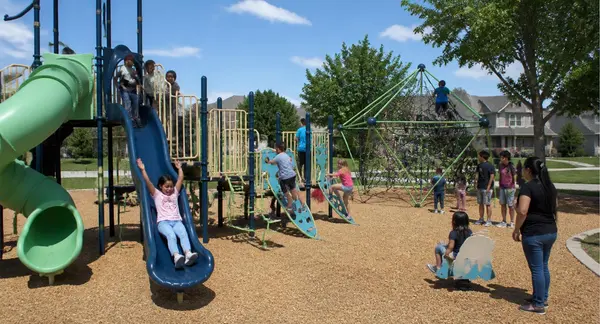
The city's main park, home to the Castle Heights Playground. Two reservable pavilions, a walking and exercise course, ADA accessible tables and restrooms.
|
Fruit Loops
End of East Oaks Drive
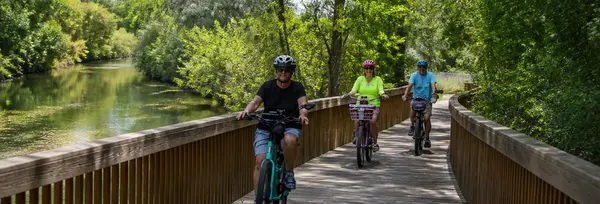
A one-way directional mountain bike park with beginner, intermediate and advanced loops. Connects to the Bonneville Shoreline Trail.
|
Cherry Hill
Open since 1967
A full water park and campground inside the city limits — slides, a lazy river, mini golf and a splash pad that draws families from across northern Utah.
|
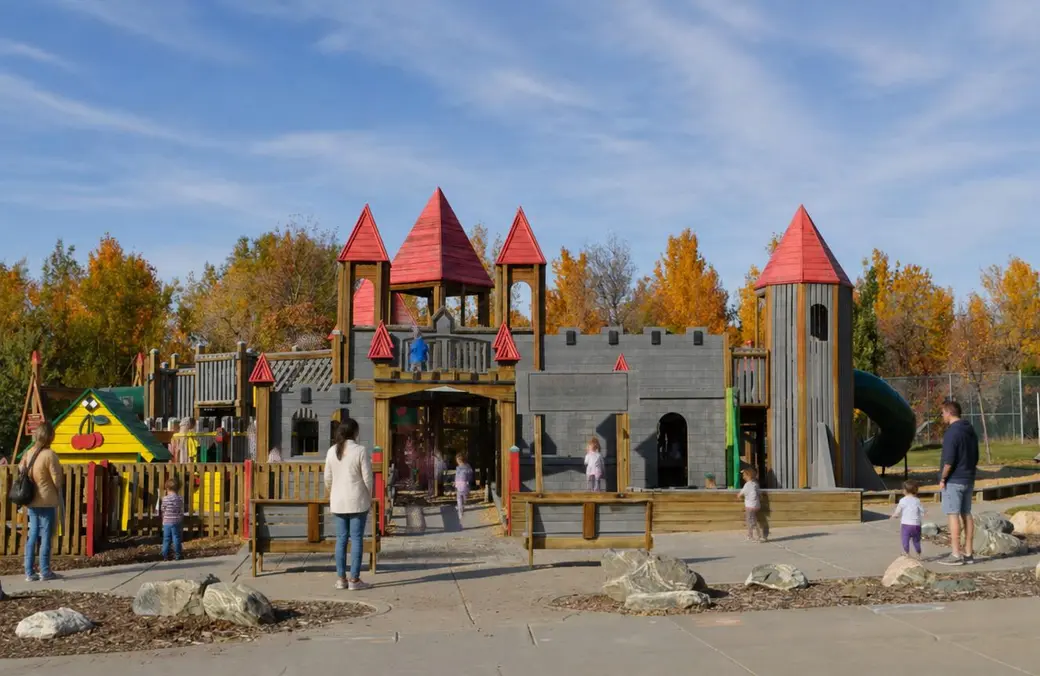
Nicholls Park has a story behind it that says a lot about the city. In 2005, residents built the original Castle Heights Playground themselves, through eight separate Eagle Scout projects and donated money, time and labor. When it needed replacing, the city appointed a Playground Commission in 2018 and the community raised the money to rebuild it — insisting the castle motif be kept. That is a fairly accurate portrait of how things get done here. The city is currently developing plans for four pickleball courts at the park, with a resident committee forming to shape them.
Fruit Loops — named for the city, not the cereal — is a mountain bike park at the end of East Oaks Drive. The beginner outer loop was finished in October 2018, and riders added harder intermediate and advanced sections afterward. It is a one-way directional system, which makes it unusually safe for kids learning, and it links into the Bonneville Shoreline Trail running along the bench.
For hiking, Bair Canyon climbs east out of the city and is the local favorite — steep, shaded and genuinely a mountain trail rather than a paved path. Davis Park Golf Course sits in the middle of the city on Nicholls Road. And Cherry Hill, which opened as a campground on June 4, 1967 and grew into a water park, is the reason a lot of Utahns have heard of Fruit Heights at all — Grant's Gulch lazy river, the Double Dragons and Little Dippers slides, Cardiac Canyon River Run, the Pirates Cove splash pad, mini golf and a climbing wall.
Who Fruit Heights actually suits
The census tells a clear story about who lives here. The median age is 41.5 — against a Utah median of 32. Households average three people, and 54.7% of adults hold a bachelor's degree or higher. This is a settled, established, high-income community where people arrive and then stay for a long time. It is not a place with constant turnover, and inventory is correspondingly tight.
Fruit Heights is a strong fit if you want a larger lot and a mountain view, you are buying above roughly $500,000, you value quiet over convenience, and you would actually use the trails that start at the end of your street. It suits families aiming at Davis High, and it suits people who want Davis County's east bench without Farmington's or Bountiful's price on the same view.
It is a poor fit if you need a starter home, want to walk to restaurants and shops, need a condo or townhome, or want the reassurance of frequent comparable sales when you go to resell. Thirteen sales in a month is a thin market in both directions.
I am Julie Burningham, a Realtor with Real Broker, and I have owned a home in Davis County since 2001 — four of my children went through Davis School District, and I have spent a lot of years hiking and gardening on this side of the county. I work with both sides of a transaction: listing homes for sellers here, and representing buyers who are trying to get into a city that does not put many houses on the market.
If you are weighing Fruit Heights against Kaysville, Farmington or Layton, or you want to know what a specific street has actually sold for, send me the question. And if schools are driving the decision, start with my guide to the schools that serve Fruit Heights — the boundaries do not follow the neighborhoods, and that catches people out.
Categories
- All Blogs (45)
- Bountiful, Utah (3)
- Centerville, Utah (3)
- Clearfield, Utah (3)
- Clinton, Utah (3)
- East Bench Real Estate (1)
- Farmington, Utah (3)
- Fruit Heights, Utah (3)
- Kaysville, Utah (3)
- Layton, Utah (3)
- North Salt Lake, Utah (3)
- South Weber, Utah (3)
- Sunset, Utah (3)
- Syracuse, Utah (3)
- West Bountiful, Utah (3)
- West Point, Utah (3)
- Woods Cross, Utah (3)
Recent Posts


GET MORE INFORMATION