

Living in Centerville, Utah: An Honest Guide from a Local Realtor
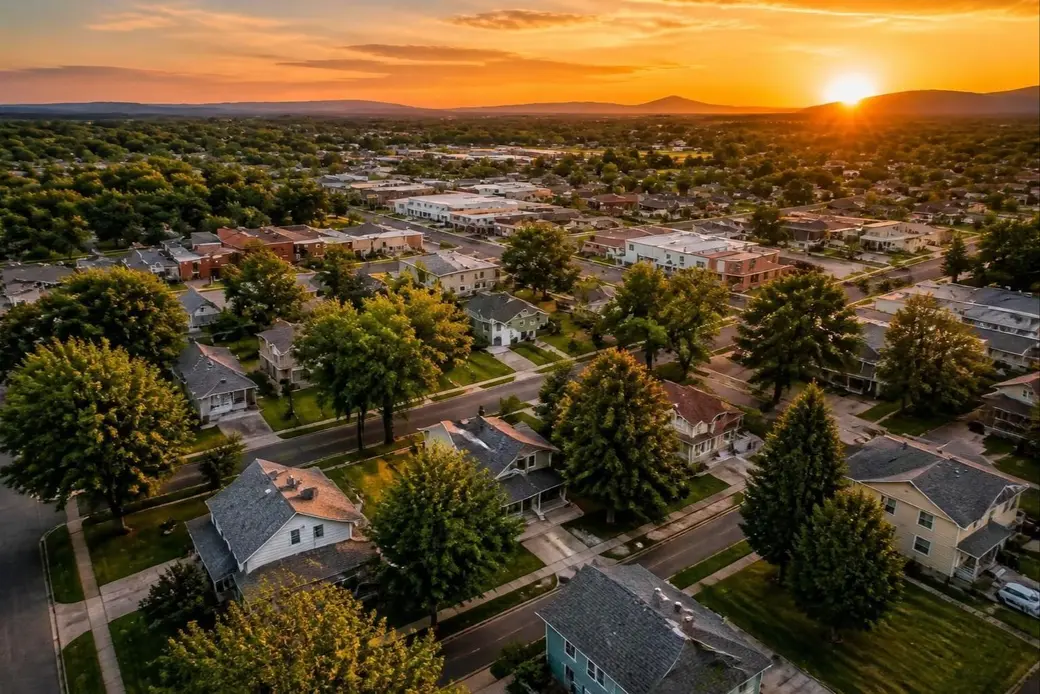
People usually find Centerville by accident. They are looking at Bountiful because it is closer to Salt Lake, or at Farmington because of Station Park, and somewhere in between they drive through a town of about 16,700 people wedged between the Wasatch mountains and Farmington Bay, and they wonder why nobody mentioned it.
I am Julie Burningham, a Realtor with Real Broker, and my office is at 1851 North 200 East — inside Centerville, not down the freeway from it. This is the guide I wish existed when people ask me what it is actually like to live here. Real numbers, real place names, and the trade-offs I would tell a friend about.
For current prices, active listings, and the school-by-school breakdown, see my Centerville, UT market page.
|
$562K
Median sale price, June 2026 (up 7.5% year over year)
|
19.7
Minute average commute — national average is 26.4
|
16,679
Residents, with 88% of homes owner-occupied
|
300+
Acres of city parks and open space
|
What does it cost to buy a home in Centerville?
Here is the current picture, and I will give you the actual figures rather than "prices are competitive."
As of June 2026, the median sale price in the 84014 zip code was $562,373, up about 7.5% from a year earlier. Homes sold at roughly $253 per square foot, and the typical home spent about 41 days on the market — nine days longer than the year before. The Census puts the median property value across all Centerville homes, sold or not, at $531,200.
What those numbers mean in practice:
- 41 days on market is a real number, not a bidding-war market. In 2021 you had a weekend. Now you generally have time to see a house twice, get an inspection, and think. That is a meaningfully better position to buy from.
- Prices are still climbing, so waiting has a cost too. Up 7.5% on a $562,000 home is about $39,000 in a year.
- The spread is wide. Centerville has 1950s ramblers on the flats near Main Street and much larger newer homes up on the bench with valley views. The same median hides both.
I would rather tell you this than pretend: if your budget is under about $450,000, Centerville is going to be tight, and you will be looking mostly at condos, townhomes, or older homes needing work. That is not a reason to give up — it is a reason to plan.
Is Centerville expensive to live in?
Almost all of the answer is housing.
Two different cost-of-living indexes put Centerville somewhere between 15% and 23% above the national average overall. They disagree on the headline number, so I will not pretend to a precision nobody has. But both agree on the shape of it, and the shape is what matters:
- Housing runs roughly 68% to 77% above the national average. That is the whole story.
- Groceries, utilities, transportation, and health care all sit at or near the national average — utilities actually come in slightly below.
So Centerville is not an expensive place to live day to day. It is an ordinary-cost place to live with an expensive place to buy. Once you are in, your monthly life is not unusual; getting in is the hard part.
Two figures that put it in perspective: the median household income here is $123,130, and 88% of homes are owner-occupied. That second number tells you a lot about the character of the town — this is not a place people pass through.
What are the neighborhoods in Centerville?
Centerville is small — about six square miles, most of it built out — so it does not break into a dozen distinct neighborhoods the way a bigger city does. But there are named subdivisions and communities buyers ask for by name, and it helps to know them.
Summerhill Lane is the one I get asked about most, because it is where most of Centerville's new construction is happening. It is a Symphony Homes community off North Main Street, with floor plans running roughly 3,100 to 6,400 square feet, three to seven bedrooms, and pricing that starts around $890,000. If you want a brand-new large home in Centerville, this is more or less the address — there is not much else being built here.
Canyon Point is a smaller newer community on the east side of town near 400 East. Worth knowing that there is a separate, unrelated Canyon Point in Lehi, so specify Centerville when you search.
Rolling Hills Estates sits up on the east bench, off Rolling Hills Drive. I live here, so I will admit to some bias — but the views and the quiet are the reason people pay for the bench.
Smoot Park and Smoot Estates are two more that buyers ask for by name, and they are a useful correction to the rule that elevation sets the price here. Both sit off the bench on flatter ground, and both are established, desirable streets. If you want a Centerville neighborhood people know without paying the bench premium for the view, start here.
Other named Centerville subdivisions and plats include Porter Lane Estates, Cedar Springs, Pheasantbrook, Pineae Village, The Hive, Pitford Acres, Country Cottages, and Fox Bridge. Most are small — a few streets each — which is why you will rarely see them named in a listing description.
Which Centerville neighborhoods have an HOA?
This is the question I get asked before almost any other, and the answer is not uniform — these subdivisions sit near each other but are set up very differently. Here is what I know from working in them:
| Neighborhood | HOA? | What that means |
|---|---|---|
| Porter Lane Estates | Yes | Single-family homes with a monthly HOA fee, typically covering utilities like sewer, water, and trash. |
| The Hive | Yes | Modern townhomes built by C.W. Urban, with a standard townhome HOA. |
| Country Cottages | Yes | A well-kept townhome and condo community. Monthly dues cover exterior maintenance, roofing, snow removal, and landscaping. |
| Pitford Acres | No | A traditional single-family subdivision with no HOA fees or rules. |
| Fox Bridge | No | An established single-family subdivision with no HOA. |
Why this matters more than people expect: an HOA fee is part of what a lender counts when they qualify you. Two homes at the same price are not the same monthly payment if one carries $250 a month in dues. And it cuts both ways — a no-HOA neighborhood means no dues, but it also means snow removal and exterior upkeep are yours.
One caution. HOA arrangements change, and dues change every year. Treat the table above as a starting point, not gospel. Before you write an offer on any home, get the current HOA documents and the actual dues figure in writing for that specific property. I will pull them for you.
Where can I see what's for sale in a specific Centerville neighborhood?
I keep live neighborhood pages for three Centerville subdivisions. They update themselves, so they show what is actually for sale today rather than what was for sale when I wrote this:
| Neighborhood | See what's available |
|---|---|
| Cedar Springs | Current listings · Market data |
| Pheasantbrook | Current listings · Market data |
| Pineae Village | Current listings · Market data |
Beyond the subdivision names, locals mostly talk about Centerville in terms of where you sit relative to Main Street and the bench.
The east bench. Above Main Street, climbing toward the Wasatch foothills. Bigger lots, newer and larger homes, valley and Great Salt Lake views, and the steepest prices in town. Rolling Hills Estates is up here. The trade-off is real: more snow, steeper grade, and a longer walk to anything.
The flats and the historic core. West of and around Main Street. This is the oldest part of town, including the Centerville Deuel Creek Historic District, and it holds the four National Register homes here — the Thomas and Margaret Brandon House, the William Capener House, the Osmyn and Emily Deuel House, and the John, Harriet, and Eliza Jennett Duncan House. Smaller lots, mature trees, more mid-century homes, closer to the elementary schools, and generally the more attainable end of the market.
The west side, toward Legacy Parkway. Between I-15 and Legacy Parkway, near Community Park. Newer subdivisions, flatter ground, quick freeway access, and the closest thing Centerville has to conventional suburban blocks.
The Parrish Lane corridor. Parrish Lane (State Route 105) is the commercial spine that runs from I-15 east to Main Street. Living near it means walking to shops and food; it also means traffic. Some people want to be near it and some very much do not.
What about the schools?
Centerville is served by Davis School District, and the structure catches out-of-state families: elementary is K–6, junior high is 7–9, and high school is only 10–12.
There are four elementary schools, all inside the city — Centerville Elementary, Reading Elementary, Jennie P. Stewart Elementary, and J.A. Taylor Elementary — plus Centerville Junior High on South Main Street. Most students finish at Viewmont High School, which is just over the line in Bountiful. There is no charter school inside Centerville city limits.
The boundaries here are physically small, which means two houses on the same street can feed different elementary schools. Never take the school listed on a real estate listing at face value.
I wrote a full guide to this — every school with grade levels, addresses, links to each school's own website, how to check which schools a specific address feeds, and how Davis District's boundary permit process works: Best Schools in Centerville, Utah: A Parent's Guide.
How bad is the commute?
This is Centerville's quiet advantage, and it is backed by a number rather than a feeling.
The average commute for a Centerville resident is 19.7 minutes. The national average is 26.4 minutes, and Davis County as a whole averages about 23.5. Centerville beats both, because it sits about 15 miles from downtown Salt Lake City with three separate ways south.
|
I-15
The direct one
Runs through town with a Parrish Lane interchange. Backs up northbound in the evening.
|
Legacy Pkwy
The local's one
SR-67 along the west side. Truck ban, lower speed limit, often moving when I-15 is not.
|
US-89
The back way
Out the east side toward the north end of the valley.
|
For transit: Centerville does not have its own FrontRunner station. The nearest are Woods Cross station at 750 South 800 West in Woods Cross to the south, and Farmington station to the north. UTA's Route 470 runs the Ogden–Salt Lake intercity corridor through the area.
Salt Lake City International Airport is roughly 15 miles away, which for most of Centerville is a genuinely short run — a real quality-of-life factor if you travel for work.
The honest caveat: I-15 through Davis County does back up northbound in the evening. If your commute is a hard requirement, drive it at 5:30pm on a Tuesday before you buy, not at 11am on a Saturday when you are touring houses.
What is there to do outdoors?
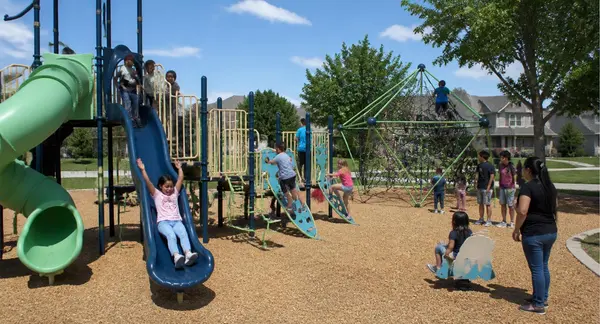
Centerville has over 300 acres of parks and open space for a town of 16,700, and the mountains start where the streets end. Here are the actual places, with addresses:
| Park | Address | What's there |
|---|---|---|
| Community Park | 1350 North 400 West | 8 pickleball courts, 6 multi-sport fields, 4 baseball diamonds, batting cage, lighted jogging path |
| Freedom Hills Park | 2150 North 150 East | Disc golf course, two trailheads (one hiking, one equestrian), pavilion, playground |
| Island View Park | 750 East 500 South | Three levels: tennis and pickleball courts, turf volleyball, multi-sport field, restrooms |
| Smoot Park | 75 West 1500 North | A natural creek running through it, pavilions, volleyball, playground |
| William R. Smith (Founders) Park | 300 North 100 East | Heavy shade, mature trees, pavilion, playground |
| Porter-Walton Park | 95 South 400 West | Basketball courts, paved walking path, playground |
| Lee Skabelund Memorial Nature Park | 100 South 700 East | Retention pond and bridge, undeveloped and quiet |
For trails, Centerville sits on more than 30 of them. The two that matter most:
- The Bonneville Shoreline Trail runs along the bench above town, following the ancient shoreline of Lake Bonneville. You can pick it up from the Freedom Hills Park trailhead.
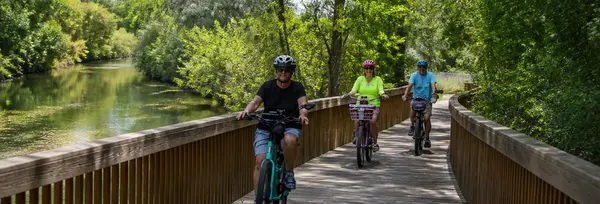
- The Legacy Parkway Trail is the flat one — a paved multi-use path running the length of the parkway on the west side, good for road cycling and long runs.
Deuel Creek runs down out of the canyon through the historic part of town, and the hike up to Deuel Creek waterfall is a genuine local favorite that most people outside Davis County have never heard of.
And the thing Centerville residents brag about: eight major ski resorts are within about 45 minutes. That is the actual reason a lot of people choose this side of the valley.
Culturally, the Davis Center for the Performing Arts is here in town, and downtown Salt Lake City's museums, concerts, and restaurants are about 15 minutes away.
So who is Centerville actually right for?
I will be straight with you about the trade-offs.
Centerville is a strong fit if you want a short commute to Salt Lake without living in Salt Lake, you want mountains and trails from your front door, you have kids and want small elementary schools inside your own city, and you plan to stay a while. That 88% homeownership rate is not an accident.
Centerville is probably not your best fit if you want a walkable downtown with nightlife, you need a lot of house for under $450,000, or you want a big new-construction subdivision — Centerville is largely built out, and most of what trades hands here is existing homes.
And the thing nobody tells you: Centerville has no high school of its own. For most families that is a five to ten minute drive and a non-issue. For a family with a kid who wants to walk to school with friends, it is worth thinking about before you buy, not after.
If you are considering Centerville
I live in Rolling Hills Estates on the east bench, my office is at 1851 North 200 East, and four of my kids have gone through Davis School District. I help people both ways — listing homes here for sellers, and representing buyers moving in.
If you are weighing Centerville against Bountiful or Farmington, or you want to know which streets actually fit your budget and your school preferences, send me a note. I will tell you honestly if Centerville is not the right answer for you. That happens, and it is better said early.
If you are still deciding who to work with, I wrote a straight answer to that question too: Who Is the Best Real Estate Agent in Centerville, Utah? — what to ask an agent, and how to tell local knowledge from a script.
Julie Burningham, Real Broker · 1851 North 200 East, Centerville, UT 84014 · (801) 448-5275
Categories
- All Blogs (45)
- Bountiful, Utah (3)
- Centerville, Utah (3)
- Clearfield, Utah (3)
- Clinton, Utah (3)
- East Bench Real Estate (1)
- Farmington, Utah (3)
- Fruit Heights, Utah (3)
- Kaysville, Utah (3)
- Layton, Utah (3)
- North Salt Lake, Utah (3)
- South Weber, Utah (3)
- Sunset, Utah (3)
- Syracuse, Utah (3)
- West Bountiful, Utah (3)
- West Point, Utah (3)
- Woods Cross, Utah (3)
Recent Posts



GET MORE INFORMATION